
How Dallas Hard Water Affects Pool Tile and Finishes
Pool resurfacing, or replastering, renews the pool’s interior finish. The material you choose influences its appearance, texture, and expected service life.
A concrete pool with plaster may need resurfacing within five to ten years, while a properly installed pebble finish can last more than twenty. Your pool’s age is the first starting point to determine if a complete pool resufacing project is right for you.
If you own a concrete or gunite pool, understanding the interior finish can help you budget ahead and recognize when maintenance needs professional attention.
How Long Do Different Pool Finishes Last?
These are manufacturer estimates from Pebble Technology International, which sells pebble finishes. Treat themas planning guidance, not guaranteed replacement dates.
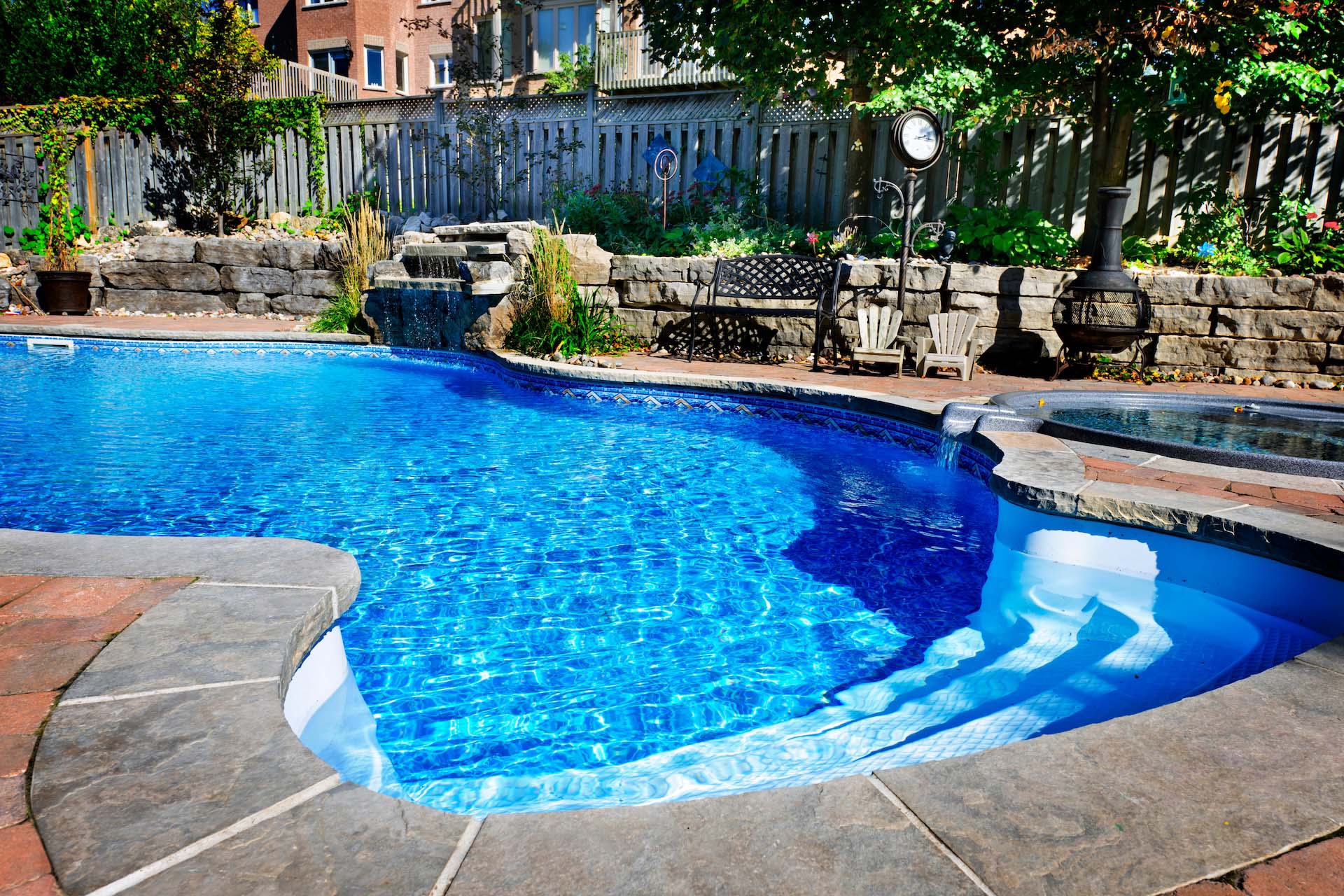
Traditional plaster provides a smooth, familiar surface that the majority of residential and commercial swimming pools have. A quartz aggregate pool deck finishes incorporate quartz into the cement-based mixture, while a pebble aggregate finish use small stones with the cement mixture. Each offers a different feel and appearance.
Unsure which finish you have? Check your pool construction paperwork or previous resurfacing invoice. A qualified contractor can also help identify it. Ask about the specific product’s maintenance requirements and warranty. The warranty coverage and expected lifespan are separate considerations.
Signs Your Pool Needs Resurfacing
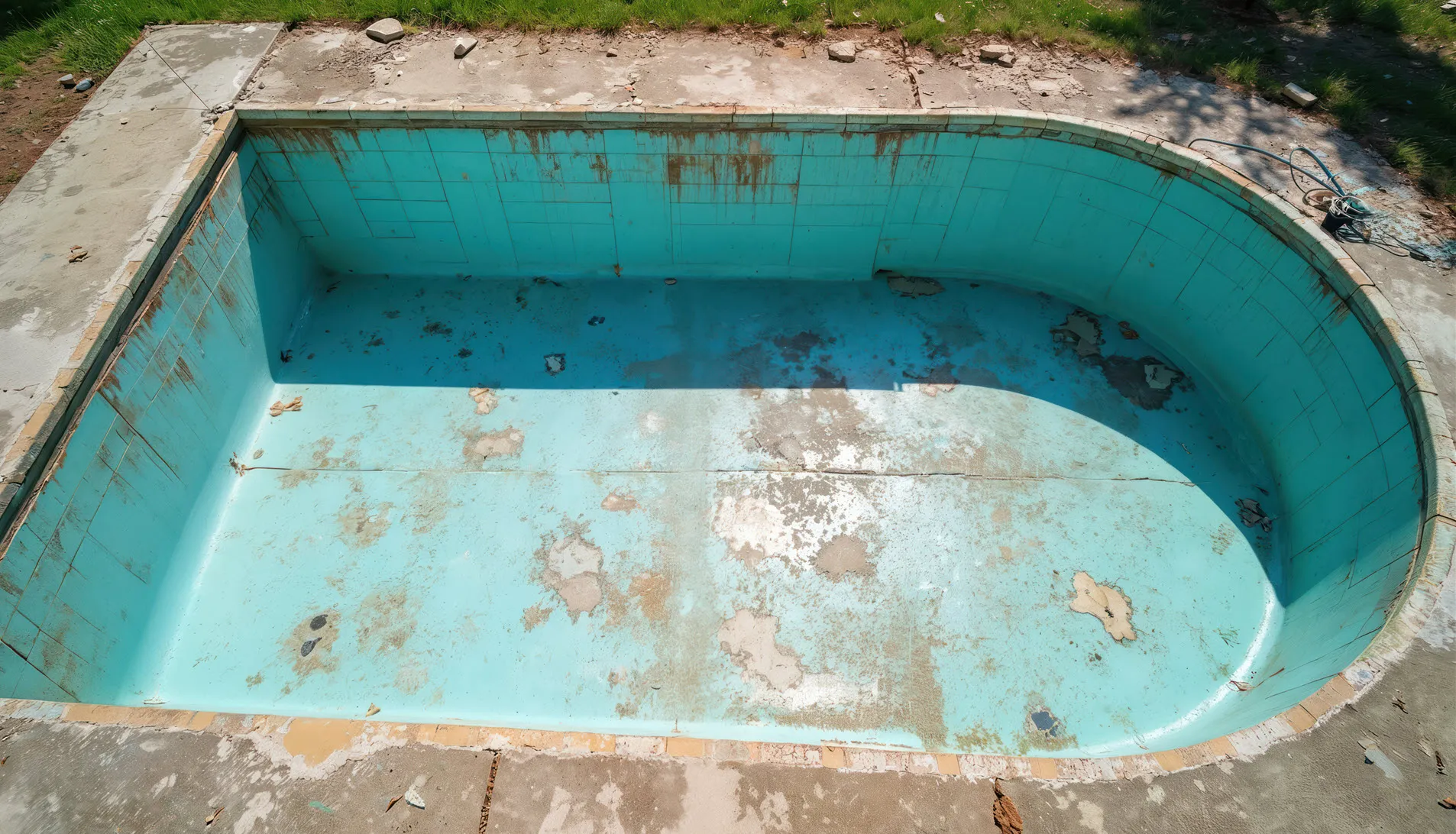
Potential warning signs include:
- Increasing roughness or pits in the surface of the pool
- Chipped or worn away sections or areas of the pool
- Persistent pool surface discoloration
- New cracks, widening cracks, or cracks that endanger safety
Roughness, pitting, discoloration, and cracks can indicate a finish needs evaluation. However, a visible imperfection does not automatically justify resurfacing the entire pool.
The National Plasterers Council explains that normal mottling, or uneven shading, is characteristic of many cement-based finishes. Fine surface crazing can also occur without indicating a defect. A professional should distinguish these conditions from damage requiring repair.
Photograph changes and note when you first noticed them. That history gives your contractor more useful information than the pool’s age alone.
Why Some Pool Surfaces Wear Out Faster
Water Chemistry
Water chemistry has a direct effect on the finish beneath your feet. The National Plasterers Council explains that chemically aggressive water can dissolve components of cement-based pool surfaces.
Etching
The low pH, low calcium hardness, low carbonate alkalinity, or a combination of these factors, that can accelerate deterioration when those conditions persist.
Think of it as a slow, gradual material loss of the pool surface itself. That's why homeowners can't forget water testing. The pool's appearance alone (clear water) doesn't tell whether the water is balanced to protect thefinish.
Does Your Pool Need Cleaning, Repair, or Resurfacing?
3 Questions To Ask
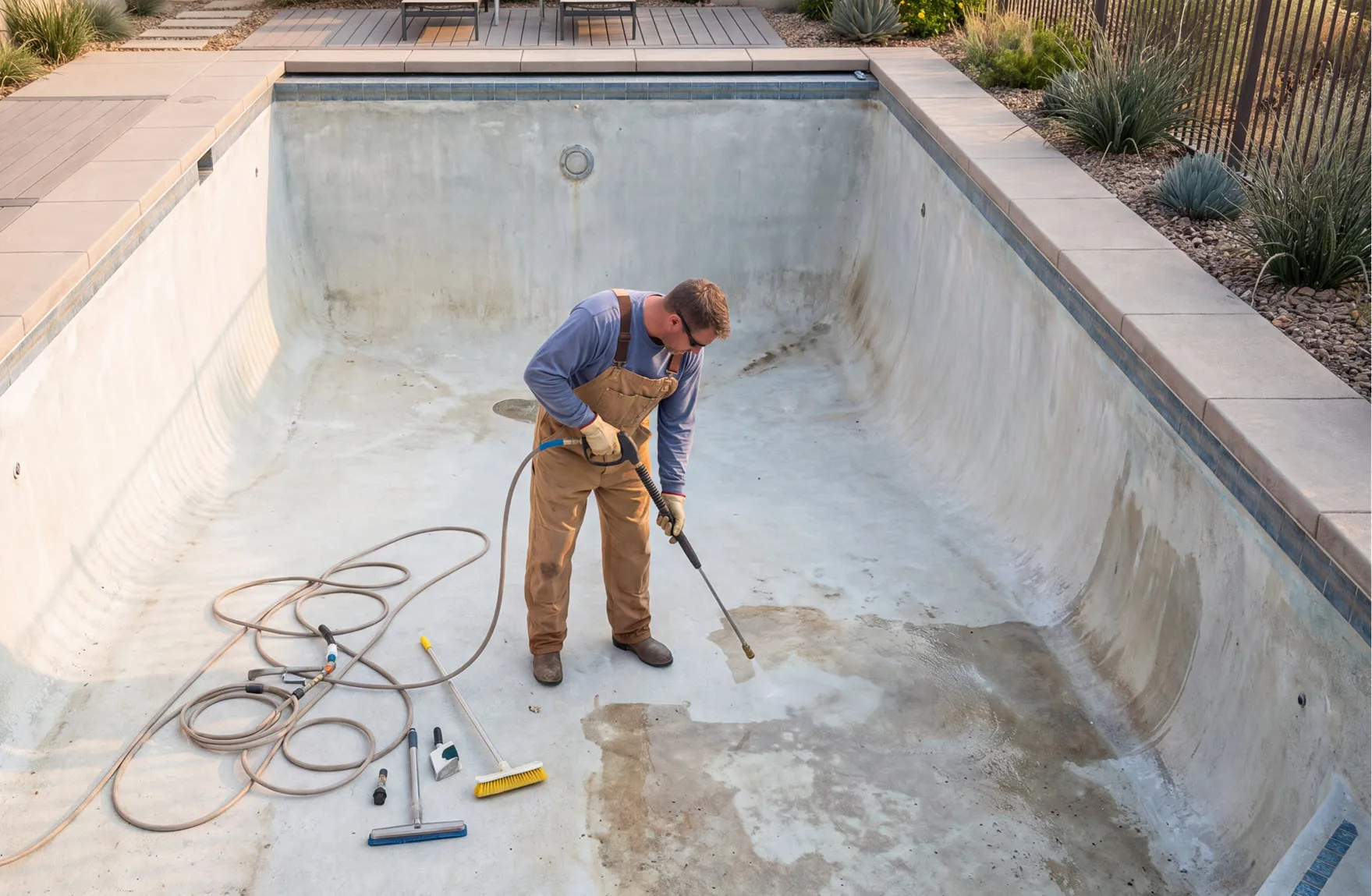
Before you approve any work to start, ask your contractor to explain with problem the proposed action plan will solve.
- Is the visible problem a deposit, a stain, ordeterioration of the finish?
- Is the damage limited to one area or spread throughout the pool?
- Do cracks or suspected water loss require a separate investigation?
Ask whether cleaning or a localized repair is appropriate and what limitations that approach would have. If full resurfacing is recommended, request an explanation of why a smaller repair would be insufficient. A useful proposal connects the observed condition to the work being recommended. It should also identify any additional investigation needed before that work begins.
How To Help Your Pool Surfaces Last Longer
Consistent pool surface care gives your finish its best chance of reaching its expected lifespan. PebbleTec recommends testing water chemistry at least weekly for its finishes and keeping water analysis reports.
Follow your own finish manufacturer’s instructions and your service professional’s advice about additional testing. Make these habits part of your routine:
- Follow written water chemistry and maintenance instructions.
- Brush with equipment appropriate for your pool finish.
- Remove leaves and other debris regularly.
- Keep service records and report surface changes to your pool maintenance provider.
After a pool resurfacing project, keep the startup instructions with your maintenance records. PebbleTec publishes specific requirements for brushing, heating, and adding salt during this period, illustrating why care must match the installed product.
When Should You Schedule an Inspection?
Schedule an evaluation when you notice pool surface deterioration or want help planning for an aging finish. Bring the installation date, product information, maintenance records, and photographs if available. Get a clear explanation of what your pool needs and why. Contact Precision Pool Restoration to discuss your surface concerns and whether cleaning, repair, or resurfacing is the appropriate next step.
Works Cited
“How Long Does a Pebble Pool Finish Last?” Pebble Technology International, https://pebbletec.com/more-to-explore/how-long-does-a-pebble-pool-finish-last/.
“Pool Care Instructions.” Pebble Technology International, https://pebbletec.com/customer-support/pool-care-instructions/.
“Pool Interior Finish Disclosure.” National Plasterers Council, 16 Dec. 2015, https://www.npconline.org/page/pool-interior-finish-disclosure.
“Swimming Pool Finishes & Etching Deterioration.” National Plasterers Council, https://www.npconline.org/page/swimming-pool-deterioration.
